War, Oil, and Thread: Why Garment Prices Keep Rising While Everyone Groans

A T-shirt looks simple until oil prices start behaving like a cricket score in the final over. One day the costing sheet is calm. The next day, thread, fabric, dyeing, transport, packaging, and electricity have all quietly raised their hands and asked for more money.
The link between war and garment prices may not be obvious at first. No one buys a kurta and thinks, “Ah yes, geopolitics.” Yet modern textiles are tied to oil in many small ways. When conflict affects oil supply, shipping routes, insurance, or market confidence, crude prices can rise. That increase travels through the textile chain, often slowly, but firmly.

War pushes oil prices beyond the petrol pump
War affects oil prices through both supply and fear. If a conflict involves oil-producing regions, nearby shipping lanes, or key trade routes, markets react quickly. Even when oil is still moving, traders may price in risk. Ships may take longer routes. Insurance can cost more. Fuel suppliers may raise rates because replacement stock looks uncertain.
This does not mean every price rise has one simple cause. Oil prices also move due to demand, currency rates, production decisions, and global inventories. But war adds a layer of worry. Markets dislike uncertainty almost as much as a tailor dislikes a customer saying, “Just make it a little fitted,” without explaining where.
For India, the oil connection matters because imported crude is a major part of the energy basket. When global oil becomes costlier, the effect can show up across fuel, transport, power, and raw materials. The impact may not arrive overnight, but it does arrive with a bill.
Why textiles feel the squeeze
Textiles are not just cotton, needles, and skilled hands. Many parts of the industry depend directly or indirectly on oil.
When oil prices rise, these costs can climb:
Thread
Polyester sewing thread, embroidery thread, and blended yarns can become more expensive when petrochemical feedstock prices rise.
Dyeing and processing
Boilers, chemicals, water treatment, and heat-based processes can see higher operating costs.
Transport
Moving yarn to mills, fabric to processors, and finished garments to buyers becomes costlier when diesel and freight rates rise.
Packaging
Polybags, cartons with plastic coatings, tapes, labels, and hangers may also reflect higher input costs.
Power backup
Many units rely on diesel generators during power interruptions. When fuel is costly, even a short outage can feel like an expensive guest who refuses to leave.
The thread problem is small but mighty
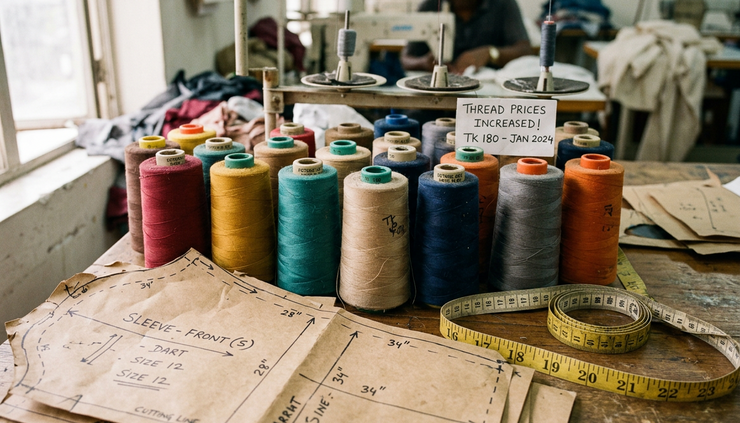
Thread looks like a tiny part of a garment. In costing, it often appears as a modest line item. But it is one of those small things that becomes very visible when it goes wrong.
A shirt cannot politely request fewer stitches because crude oil is expensive. Jeans still need strong seams. Kids’ wear still needs durable thread. Embroidery still needs shine, colour, and consistency. Manufacturers cannot simply swap high-quality thread for cheaper options without risking repairs, returns, or angry customers.
The tricky part is that thread prices may rise along with fabric, trims, washing, and logistics. One increase is manageable. Five increases together start looking like a family WhatsApp group during festival planning, too many voices, all urgent.
For manufacturers, this creates a difficult choice. Absorb the increase and reduce already-thin margins, or pass it on and risk losing orders. Neither option comes with background music and a happy ending.
Buyers are frustrated for good reason
Buyers, whether retailers, wholesalers, exporters, or end customers, often see only the final increase. A garment that used to cost ₹500 now costs more, and the first reaction is understandable: “Again?”
Retail buyers face pressure from their own customers. If prices rise too much, sales may slow. If prices stay the same, margins shrink. Many shoppers compare current prices with older ones, as if last year’s price tag were a legal document. This makes retailers cautious about accepting higher manufacturer quotes.
Export buyers have another headache. They may have fixed contracts, committed delivery prices, or seasonal ranges already planned. A sudden rise in thread, fabric, or freight costs can disturb the whole costing structure. Nobody enjoys reopening price discussions after approvals are done. It is the business version of redoing a school project the night before submission.
End customers also feel squeezed. Clothing competes with food, rent, education, fuel, and every other monthly expense. When garments become costlier, people delay purchases, buy fewer pieces, or wait for discounts. That behaviour is practical, but it adds more pressure down the chain.
Manufacturers are not exactly dancing either
It is easy to assume manufacturers raise prices because they can. In reality, many are trying to protect production without upsetting buyers.
A garment manufacturer must manage raw material bookings, labour wages, electricity, rent, machinery maintenance, compliance, payment delays, and delivery deadlines. When oil-linked costs rise, suppliers may revise prices faster than manufacturers can revise quotations. An order accepted at one cost may become less profitable before it is even shipped.
Common challenges include:
Quoted prices becoming outdated quickly
Suppliers asking for shorter validity on rates
Difficulty maintaining quality while controlling cost
Buyer resistance to revised prices
Cash flow pressure due to higher working capital needs
Risk of cancelled or reduced orders
Manufacturers also cannot switch suppliers every week like choosing a different tea stall. Quality, colour matching, lead time, and reliability matter. A cheaper thread that breaks during stitching can slow production and waste labour time. A cheaper dye that causes shade variation can turn one order into a full-day migraine.
Why garment prices rise in layers
Garment pricing rarely jumps because of one dramatic cost. It rises in layers.
A little more for yarn. A little more for thread. A little more for dyeing. A little more for transport. A little more for packaging. By the time the shirt reaches the rack, the final price has collected these increases like a train collecting passengers at every station.
This is why buyers may hear, “Oil prices went up,” even when they are buying cotton clothing. Oil is not always the fabric, but it often powers the journey.
The pricing chain also has timing gaps. Some manufacturers may have old stock and delay increases. Others may face new rates immediately. This creates confusion in the market because two suppliers may quote different prices for similar garments. One may look expensive, while the other may simply be using older inventory. For a short time, both can be telling the truth.
What helps when everyone is annoyed
No one can remove war risk from a costing sheet. But clearer communication can reduce the shouting, or at least lower it to a manageable mutter.
Manufacturers can help by showing cost changes in a simple way. Buyers do not need a 40-page lecture on crude oil, but they do appreciate clarity. A short breakdown of fabric, thread, processing, and freight changes can make price revisions easier to understand.
Buyers can help by allowing realistic price validity periods and discussing alternatives early. Small design changes, fabric substitutions, order planning, and better forecasting can reduce sudden shocks. In some cases, bulk booking or phased pricing may help both sides share risk more fairly.
The industry also benefits when both sides avoid blame. Buyers are not being unreasonable for resisting price hikes. Manufacturers are not being greedy by asking for revised rates. Most people in the chain are simply trying to avoid being the last person holding the inflated bill.
The takeaway
War can push oil prices up, and oil can push textile costs up in ways that are easy to miss. Thread, fabric, dyeing, transport, packaging, and power all feel the pressure. Buyers groan because garments become harder to sell at higher prices. Manufacturers groan because making the same garment now costs more.
So the next time a garment costs more than expected, it may not be just a price tag being dramatic. It may be carrying a long story of fuel, freight, fibres, and a tiny cone of thread doing its best under global pressure.
At Veetrag Hosiery, we understand that garment manufacturing is about more than the finished product. Every piece reflects a chain of materials, processes, and decisions that come together long before it reaches the buyer. Understanding these connections is an important part of understanding the textile industry itself.


Comments